How To Install Snmp On Server 2003 Without Cd
How To Install Snmp On Server 2003 Without Cd Rating: 4,0/5 8871votes
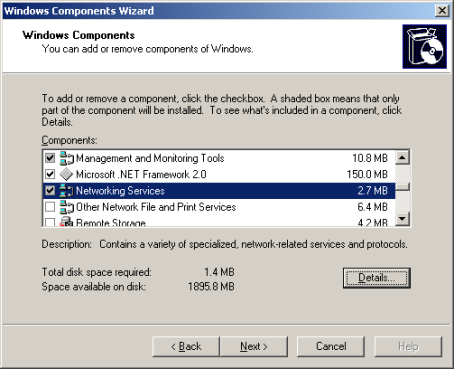
SNMP on Windows NT 4/2000/2003/XP. Click on Start Settings Control Panel. Double-click on Add/Remove Programs. Click on Add/Remove Windows Components. Click on Management and Monitoring Tools and click on Details. Check Simple Network Management Protocol and click OK. Hello,I recently got the above server with a bunch of other components for free. I got the server to run windows server 2003 without any problems. It has one 2.83ghz.
I have a PXE server for deploying Windows XP and Windows 7 to workstations. The process is as follows: • Boot the workstation from the NIC. Game Maker 8 Enemy Airplanes.
• Workstation sends a DHCP request. • DHCP server responds with an IP address and the location of the PXE server. • Workstation downloads WinPE image file from PXE server via TFTP • Workstation stores WinPE image file in memory and executes it.
• Once booted into WinPE, I connect to a network share to gain access to either the Windows XP or Windows 7 installation files. • A custom script is launched to guide you through the process of formatting and partitioning the hard drive(s) (using DISKPART and FORMAT). • Another custom script asks for details such as the hostname to assign to the workstation. The answers provided are used to build an unattended answer file (SIF [Setup Information File] for WinXP and XML for Win7). • The Windows setup EXE is launched, passing the unattended answer file to it as a parameter.
The Windows XP and Windows 7 installation sources have been customised to include the drivers for our Dell workstations. They also run a number of scripts upon first booting up to install software packages. This process works very well for our workstations and I would now like to use it for building our servers too. The vast majority of our servers are HP Proliant DL360 G6, DL380 G5 and DL380 G6. They’re running Windows Server 2003 (various editions) or 2008 (various editions). To date, we have always built the HP Proliant servers using the SmartStart CD provided. SmartStart does three useful things for us: • Setup RAID with HP Array Configuration Utility (ACU).
• Installs and configures SNMP • Installs various HP Tools for Windows (HP Array Configuration Utility, HP Array Diagnostic Utility, HP Proliant Integrated Management Log Viewer, etc) Using SmartStart I have never had to manually download and install Windows drivers for network, sound, video, etc. I'm not sure if this is because SmartStart copies drivers from the CD during setup, or whether Windows just has the drivers natively in its driver CAB. If I abandon the SmartStart CD in favour of my PXE server I would have to do the following: • As I wont have access to ACU, I'll configure the RAID (before booting to the PXE server) by pressing F8 (during the boot process) to access Option ROM Configuration for Arrays (ORCA).
• Installation of SNMP and the HP Tools will have to be installed once the Windows installation is complete using the Proliant Support Pack. Is this method OK? Is there anything that the SmartStart CD does that I'll be unable to do by other means?
Are there any disadvantages to not using the SmartStart CD? UPDATE 05/01/12 I’ve been reading through the SmartStart Scripting Toolkit documentation. The scripting toolkit contains command line tools which work within WinPE and can such things as configure BIOS settings, configure an array and setup ILO. I’m personally not too bothered about configuring BIOS settings as I rarely deviate from the defaults (unless the server is to be a Hyper-V host).
I’m not too fussed about being able to configure the array from within WinPE, as I’m happy to just press F8 and use Option ROM Configuration for Arrays (ORCA). Although, if it’s easy enough to do, I will explore this further, as it saves time if everything can be configured from within WinPE. One of the nice features all the tools possess is that you can pass input files to them. Configure one server to your requirements, capture its configuration to a file (using the appropriate tool), you can then use the tool on other servers passing the input file with the captured configuration.
Array controller drivers appear to be included with the toolkit along with example of how to incorporate them within a WinPE build. I suppose WinPE won’t be able to see logical volumes (I.E 2x physical disks in a RAID 1 configuration) without the array controller drivers? I mentioned in my post that SmartStart normally installs a bunch of Windows HP tools for you. I’ve had a look today, and if you run the SmartStart CD from within Windows all the tools can be installed. Therefore I can do this after the Windows installation is complete. The SmartStart CD appears to contain a lot Windows drivers.
I can customise my Windows 2008 source to incorporate these drivers. However, I understand that incorporating an array controller driver is a little different to most drivers. I believe that you have to provide the driver during the very early stages of the Windows setup. I’m working through the Scripting Toolkit documentation to try and work this out. Just wanted to bring this post to rest. I am now successfully building HP Proliant servers without the SmartStart CD.
I incorporated the drivers from the SmartStart Scripting Toolkit into my WinPE WIM file. I tested booting to WinPE before and after adding the drivers, the only difference seemed to be that WinPE couldnt see the NIC before adding the drivers. Once Windows Server 2008 has finished installing, I have configured runonceex to launch the Proliant Support Pack to install tools and drivers upon first logging in. – Feb 23 '12 at 23:13. We have done this many times. You can look at HP RDP (HP remote deployement) wich come with many images to remote install via (PXE) i do not remember all the details. But i know it s doable.
You can take the images from RDP and follow the tasks they do before/after the install image the end system is exactly the same as if you ve done the installation with smartstart ps. I ve found the smartstart scripting toolkit document hard to follow. Copying the images and install setps from HP RDP was easier for me.
SNMP (Simple Network Management Protocol) is an internet protocol used in network management systems to monitor network-attached devices such as computers, servers, routers, switches, gateways, wireless access points, VoIP phones, and etc. For conditions that warrant administrative attention. SNMP provides management data in the form of variables on the managed systems, which describe the system configuration parameter or current status value. These variables can then be read and queried (or sometimes set or write) by managing applications. Windows system, including Windows XP, Windows Vista, Windows 7, Windows Server 2003, Windows Server 2008 (R2), Windows 8, Windows 8.1, Windows Server 2012 (R2), Windows 10, Windows Server 2016, either does not have SNMP service installed by default, or does not turn on SNMP service by default, or does not configure SNMP service by default, thus users need to manually install, enable or configure SNMP service before they can monitor the system via SNMP.
Note that you must be logged on as an administrator or a member of the Administrators group in order to complete this procedure. If your computer is connected to a network, network policy settings may also prevent you from completing this procedure. How to Install and Enable the SNMP Service • In Windows XP and Windows Server 2003, click Start button, then go to Control Panel and run Add or Remove Programs applet. On Add or Remove Programs dialog, click Add/Remove Windows Components to open “Windows Components” wizard. In Windows Vista, Windows 7, Windows Server 2008 and Windows Server 2008 R2, click Start button, then go to Control Panel.
Click on Programs ->Programs and Features link and then click on Turn Windows features on or off. If you’re prompted with User Account Control dialog, click “Continue”. In Windows 8, Windows 8.1, Windows 10, Windows Server 2012, Windows Server 2012 R2, Windows Server 2016 or later,, then click or tap on Programs ->Programs and Features link, followed by Turn Windows features on or off.
If you’re prompted with User Account Control dialog, click “Continue” or “Yes”. • In Components of Windows XP or Windows Server 2003, click on the Management and Monitoring Tools (make sure that you do not select or clear, tick or untick its check box to change the existing selection), and then click Details.
• Select and tick the check box of Simple Network Management Protocol (SNMP), Simple Network Management Protocol or SNMP feature. In Windows XP or Windows Server 2003, you need to click additional Next button.
SNMP service will be installed on the system. You may require to insert the Windows setup CD/DVD disc into optical drive. • SNMP will start automatically after installation.
But it’s recommended to verify the service status from Services in Control Panel or Task Manager, and if it’s stopped, you can start the SNMP service from there. Two new services will be created: • SNMP Service which is the main engine with agents that monitor the activity in the network devices and report the information to the monitoring console workstation. • SNMP Trap Service which receives trap messages generated by local or remote SNMP agents and forwards the messages to SNMP management programs running on this computer. Windows doesn’t assign any community string to the SNMP service by default, and also only allow access from localhost (this computer only) or local devices. Further configuration is needed to add in desired community string, which act as the password to grant reply to any SNMP request from remote system. How to Configure Security Community String for SNMP Service Note: The following guide public community string as example.
• Open Control Panel. • In Windows XP, go to Performance and Maintenance, while the other versions of Windows, System and Maintenance link. • Open Administrative Tools. • Run Services applet. • Locate and right click on SNMP Service, then select Properties. • In SNMP Service Properties window, click on Services tab. • Under “Accepted community names” section, click Add button.
• Select the appropriate permission level for the community string in the “Community Rights” drop down list to specify the authentication that the host used to process and grant SNMP requests from the selected community. Normally READ ONLY is recommended. • In the “Community Name” box, type public or any case-sensitive community name that you want. • Click on Add button.
• In order for the SNMP service to accept and receive SNMP request packets from any host on the network, including external remote host regardless of identity, click Accept SNMP packets from any host. To limit the acceptance of SNMP packets, click Accept SNMP packets from these hosts, and then click Add, and then type the appropriate host name, IP or IPX address in the Host name, IP or IPX address box.
You can restrict the access to local host or limited servers only by using this setting. Finish off by clicking Add button again. • Click OK when done. Note that you may need to reboot for the settings to take effect. Optionally, if you requires to send SNMP traps to remote trap destination, you can configure it at the “Traps” tab.
How to Configure SNMP Traps • Open Control Panel. • In Windows XP, go to Performance and Maintenance, while the other versions of Windows, System and Maintenance link. • Open Administrative Tools. • Run Services applet. • Locate and right click on SNMP Service, then select Properties. • Go to Traps tab.
• In SNMP Service Properties window, click on Traps tab. • In the “Community name” text box, enter public or any other case-sensitive SNMP community name to which this computer will send trap messages. • Click on Add to list button. To the lefty hippy whining about the advertisements.
First of all, you should be thankful you didn't have to pay for this. Secondly the advertisements are in place so you don't have to pay for this. If you don't like it, quit whining and go pay a university to teach you how to do this stuff. You must not realize this, however owning a machine capable of being a webserver, maintaining it, keeping it connected to the Internet, publishing content to it, all costs money. You didn't pay the owner of the site one cent to cover the administrative costs. Nothing in life is free you idiot.
Someone always has to pay for it. Windows Password Crack Boot Disk there. You are just used to everyone else floating the bill for you. Maybe you should wake up, walk out of liberal la la land, and join the rest of us in the real world. Well there is my 2 cents.
